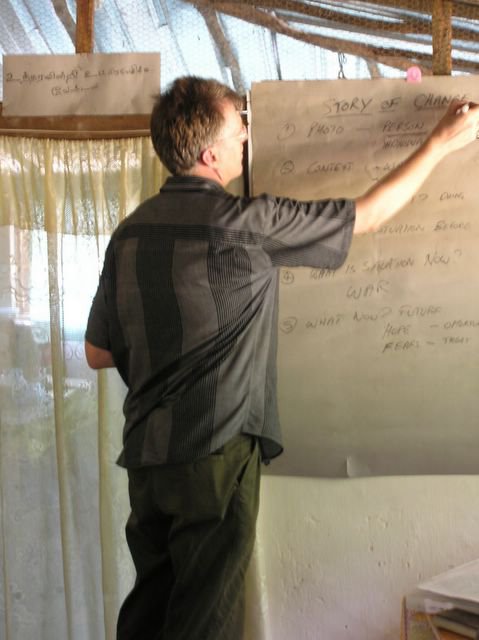
My mobile, on silent mode, vibrated again during a meeting. I peered at the screen, 'How U get involve and support this process?'. It was from Herman Kumara. The last few weeks has seen an interesting and fast moving campaign by CAFOD’s partners, National Fisheries Solidarity Movement (NAFSO), from Negombo, Sri Lanka.
In response to the enormous problems faced by the fish-workers in Sri Lanka, especially since the immense destructive impact of the 2004 Tsunami, NAFSO has been pushing the Government to adopted, and fully implement, a national fisheries development policy. One of the key concerns which NAFSO feels should be urgently addressed is ‘saving the traditional Sri Lankan fishing grounds’.
The Tsunami did great damage, destroying many coral reefs where fish traditionally spawn as well as destroying 2/3rd of the coastal fishing vessels. During the down time, when Sri Lankan fisherman where no longer able to go to sea, bigger fishing vessels from foreign fisher nations, crept in. They are a now major threat to the traditional small fisher-workers of Sri Lanka.
In the rush to regenerate an income poor fisherman reverted to damaging and ecologically destructive practices such as using dynamite and poisons to catch fish. The Government is seen to be doing little to stop the spread of these practices, which could eventually destroy sustainable populations of coastal fish.
The ongoing civil war in Sri Lanka also has an immense and continuing impact on small scale fisherworkers, who form the vast majority of those employed in the fishing industry in Sri Lanka. Curfews and range limits preventing deep sea fishing, are frequently imposed in certain areas and fisherman frequently 'disappear' or are killed. They are from both sides in the violent ethnic conflict and are also victims of both sides.
The People’s Fisheries Commission, established by NAFSO, has been touring the coastal fishing communities, inviting local fisherman to share their experiences, describe the state of fishing in their area and how best the country can support, protect and promote the coastal fisheries. To highlight the progress being made and to address some of the issues being raised Herman Kumara, the Convener of NAFSO has being sending these daily SMS messages to all NAFSO’s contacts and supporters.
The Sri Lankan Government recently announced a fisheries Memorandum of Understanding with the Government of the Maldives. A protest orgsanised by NAFSO outside the Ministry building led to a meeting with the Minister, refered to in Herman's first SMS, and the cancelation of the MOU.
Here is a flavour of the imaginative way CAFOD partners NAFSO are using mobile communications and information technology to heighten awareness among the population here and to struggle for real change.
SMSs from Herman ......
Sent:
12/04/07 06:39
From:
NAFSO National Assoc for Fisheries Societies
Minister was thouroughly angry though some success with discussion. He Agreed to CFC involvement on fish marketing, Cancel MOU signed with Maldives company. But did not agree to cancel the lisences issued to foreign fishing vessels. Need vigourous campaign to achieve better impact collectively. Herman
Sent:
12/05/07 09:15
From:
NAFSO National Assoc for Fisheries Societies
Today,forth day of the People's Fisheries Commission meet people at Trincomalee. Commissioners found people much interested to share their issues and need indepth analysis and education to formulate Sustainable Fisheries Policy. Need deep animation process with appropriate practical action. TY. Herman
Sent:
15/05/07 21:24
From:
NAFSO National Assoc for Fisheries Societies
Today,7th day of the Fisheries Commission work completed at Tangalle. Number very low, but very fruitful dialogue with them. Hope there will be follow up work.
Sent:
13/05/07 19:32
From:
NAFSO National Assoc for Fisheries Societies
We completed Negombo, Puttlam, Kurunegala. Trincomalee & Pothuwil Fisheries Commission work today. People want Peace. War and tsunami affected people ready to come forward and take strong action with NAFSO/ANRHR. All fishers claim they need policy which help to sustain their life and livelihoods. 5 more days to go along southern and west coast communities and Polonnaru inland fishers tomorrow. How U get involve and support this process. TY. Herman
Sent:
18/05/07 06:22
From:
NAFSO National Assoc for Fisheries Societies
Final day of FC will meet people @ Kalutara today. The situation is alarming as people affected by tsunami, war, destruction & market forces are marginglized & helpless in coastal communities. Tsunami Guarantee Card given by MOF is just a paper & nothing provided 4 most people. Tsunami houses are another big issue 4 extended, leased & rented families . Fuel price hike & low fish price, destructive fishing should be addressed effectively. Amidst all war is the biggest threat to lives & livelihoods of the fisher people. We all need meet soon and analyse and plan an effective way to address all soon. HK
Sent:
17/05/07 19:58
From:
NAFSO National Assoc for Fisheries Societies
Day 9 FC met Galle Fishers @ Ratgama. Major issues of destructive fishing, irregularities of tsunami rehabilitation, tourism displacement & beach seine fishers issues were highlighted. Tom Kochery shared Nandigram experience @ West Bengal. People realized, People's policy a success with their commitment.
Sent:
18/05/07 19:00
From:
NAFSO National Assoc for Fisheries Societies
NAFSO completed the 10 days Fisheries Commission work today at Kalutara. More than 200 oral presentations and 800 written submissions from fishers, tsunami and war affected people in 10 districts. Around 1500 people participated the work. Nimal(CP), Malinie, Kochery and Herman served as the commissioners. Thanks to all participated, assisted to the work many ways, organizing the meeting, and success of the commission.
To find out more about NAFSO and the People’s Fisheries Commission do visit NAFSO’s website and if you have a moment send them a message of support and solidarity.
Friday, May 18, 2007

Monday, May 14, 2007
My Parting from Anderson Road, Kolubowila
Dear Damith
Thanks for your message. My heart missed a beat yesterday when the rent payment I made to you was bounced. Strange I couldn't understand why; then I noticed I had sent it to the Commercial Bank and not the Bank of Ceylon. Whoops! - I have sent it to the right account so would be good to know when it arrives.
Yes Priyantha is doing well in London and staying in my house there. That's very useful as he can keep an eye on things. He is still studying English in preparation for going on to study art. I have forwarded your email to him and I am sure he will get in touch. His art BLOG is CLICK.
Well my reference to this not being a good time to return here is all to do with the current, sliding political situation. The media is becoming more and more compliant, journalists fear for their lives if they aren't. You'll have heard about the Defence Secretary and the President's brother, Gotabaya, calling the Daily Mirror editor and berating her for telling the truth??
The Rajapaksa brothers are accused of running the Government like a kitchen cabinet and now control a lot of spending Ministries - but only one was ever elected.
I think today's feature in The Daily Mirror is an excellent analysis and by a military man too... You can see that it's the Daily Mirror we get delivered daily and the local scrap paper guy calls every now and then to take them away - wow how the pile mounts!
Then there's corruption and the sidelining of COPE, the Parliamentary Commission on corruption - it's findings an alarming revelation of corruption in the heart of Government. With inflation at record heights and the ordinary people suffering one ask 'what price a so called unitary state?'
So all rather dismal - and the recent SLFP proposals to end the conflict and offer the Tamils a constitutional settlement fell far far short of the mark. It all rather makes people feel hopeless.
Ground views is a good news and comments website by the way.
Well the owner of the new house, we're moving to, Pradeep, is also leaving the country. He works at HSBC and his young family is emigrating to Canada to join a brother who is already settled there. We spoke with Pradeep the other day and he said how much he would like to stay in Sri Lanka but it was a mess 'What to do - Nae? I want my children to have a chance!'
It is so sad to see people saying that about a country with such promise and such beauty. And I am afraid land prices and rental prices are not going up with inflation but the opposite way. No doubt you'll hear more from your brother.
We have all enjoyed living here and my friends from various parts of the world, who have visited, have also enjoyed the peace and quiet of Anderson Rd.
I hope there's not too much to do when you return but the wood beetle have certainly had a feast and I think a beetle fumigation before you move in would at least arrest the deterioration....the cupboards in my bedroom are not more like paper!
We'll stay in touch.
Ciao
Thanks for your message. My heart missed a beat yesterday when the rent payment I made to you was bounced. Strange I couldn't understand why; then I noticed I had sent it to the Commercial Bank and not the Bank of Ceylon. Whoops! - I have sent it to the right account so would be good to know when it arrives.
Yes Priyantha is doing well in London and staying in my house there. That's very useful as he can keep an eye on things. He is still studying English in preparation for going on to study art. I have forwarded your email to him and I am sure he will get in touch. His art BLOG is CLICK.
Well my reference to this not being a good time to return here is all to do with the current, sliding political situation. The media is becoming more and more compliant, journalists fear for their lives if they aren't. You'll have heard about the Defence Secretary and the President's brother, Gotabaya, calling the Daily Mirror editor and berating her for telling the truth??
The Rajapaksa brothers are accused of running the Government like a kitchen cabinet and now control a lot of spending Ministries - but only one was ever elected.
I think today's feature in The Daily Mirror is an excellent analysis and by a military man too... You can see that it's the Daily Mirror we get delivered daily and the local scrap paper guy calls every now and then to take them away - wow how the pile mounts!
Then there's corruption and the sidelining of COPE, the Parliamentary Commission on corruption - it's findings an alarming revelation of corruption in the heart of Government. With inflation at record heights and the ordinary people suffering one ask 'what price a so called unitary state?'
So all rather dismal - and the recent SLFP proposals to end the conflict and offer the Tamils a constitutional settlement fell far far short of the mark. It all rather makes people feel hopeless.
Ground views is a good news and comments website by the way.
Well the owner of the new house, we're moving to, Pradeep, is also leaving the country. He works at HSBC and his young family is emigrating to Canada to join a brother who is already settled there. We spoke with Pradeep the other day and he said how much he would like to stay in Sri Lanka but it was a mess 'What to do - Nae? I want my children to have a chance!'
It is so sad to see people saying that about a country with such promise and such beauty. And I am afraid land prices and rental prices are not going up with inflation but the opposite way. No doubt you'll hear more from your brother.
We have all enjoyed living here and my friends from various parts of the world, who have visited, have also enjoyed the peace and quiet of Anderson Rd.
I hope there's not too much to do when you return but the wood beetle have certainly had a feast and I think a beetle fumigation before you move in would at least arrest the deterioration....the cupboards in my bedroom are not more like paper!
We'll stay in touch.
Ciao
Tuesday, April 24, 2007
Tuesday, April 17, 2007
Tuesday, January 02, 2007
All in a New year 2007
Happy New year but it begins badly here in Sri Lanka. The war has notched up a degree with fighting over the festive season and a news article today from the Chief of the Army saying “We have come forward in order to annihilate the common enemy for separation and protect the territorial integrity of our Sri Lankan Motherland and her nation,” so not a lot of hope for peace as the New Year dawns.
Well may be some signs; Bishop Rayappu of Mannar has started a petition to be signed by ordinary people, electors, addressed to all parties of the conflict, to return to peace talof hope ks. "Using productively our resources regretting our past mistakes of over 50 –years," it says "we can build together a peaceful and beautiful Sri Lanka, as children of mother Lanka."
But such evocations for peace are rarely given space by the dominant forces on both sides of this intractable conflict. But there are other signs too. Recently a Dhana was offered to senior Buddhist monks by the Archbishop of Colombo at his own home. A Dhana is an offering to monks which also demonstrates a respect for their revered position in the community. This I hope will go someway to decreasing the anti-civil society rhetoric of the more chauvenist and nationalists voices in some sections of the Buddhist community here. But there's a lot more work to be done in breaking the isolation of the Buddhist Sangha some of whom seem firmly wedded to the concept of a Sri Lankan state historically 'gifted' to the Sinhalese people. Not a good basis on which to build a just, multi-ethnic and multi-religious society.
Hopefully, with Caritas Sri Lanka and other partners here in Sri Lanka, we can continue the slow and painstaking process of trying to build peace in this much divided society.
Well may be some signs; Bishop Rayappu of Mannar has started a petition to be signed by ordinary people, electors, addressed to all parties of the conflict, to return to peace talof hope ks. "Using productively our resources regretting our past mistakes of over 50 –years," it says "we can build together a peaceful and beautiful Sri Lanka, as children of mother Lanka."
But such evocations for peace are rarely given space by the dominant forces on both sides of this intractable conflict. But there are other signs too. Recently a Dhana was offered to senior Buddhist monks by the Archbishop of Colombo at his own home. A Dhana is an offering to monks which also demonstrates a respect for their revered position in the community. This I hope will go someway to decreasing the anti-civil society rhetoric of the more chauvenist and nationalists voices in some sections of the Buddhist community here. But there's a lot more work to be done in breaking the isolation of the Buddhist Sangha some of whom seem firmly wedded to the concept of a Sri Lankan state historically 'gifted' to the Sinhalese people. Not a good basis on which to build a just, multi-ethnic and multi-religious society.
Hopefully, with Caritas Sri Lanka and other partners here in Sri Lanka, we can continue the slow and painstaking process of trying to build peace in this much divided society.
Monday, January 01, 2007
Waste and Wanting
A quiet afternoon in Anderson Road there there was that often heard cry of a street seller passing my gate. I would normally resist the knocks and bell rings; 'just another attempt to make a fast buck', I thought. But something made me go answer the bell and there was Ruwan, a 35 year old father of 4 kids, on his bike looking for anything he could re-cycle. 'Do you take old newspapers?' I asked.

His eyes lite up 'Oh yes Mr, how many you have?'. Not only would he take old papers he offered to pay for them too. I went into my office and emerged with a ton or two of old newspapers that had started to become a major health and safty hazard. Now imagine cycling this bike home? In this picture he is only carrying half the bundle.
Like in so many other poor societies, here in Sri Lanka many make their meagre living from other people's waste but sadly not in plastics. Only yesterday I felt I was bitten by a showl of plastic bags when swimming on the mount Lavinia Beach. Imagine my delight, but complete incomprehension, when I saw announced in the news that production of plastic bags and wrappings, under 20 microns, will be illegal from 1st January 2007. Well so is extra-judicial execution but that runs rife.
Some hope for 2007.

Like in so many other poor societies, here in Sri Lanka many make their meagre living from other people's waste but sadly not in plastics. Only yesterday I felt I was bitten by a showl of plastic bags when swimming on the mount Lavinia Beach. Imagine my delight, but complete incomprehension, when I saw announced in the news that production of plastic bags and wrappings, under 20 microns, will be illegal from 1st January 2007. Well so is extra-judicial execution but that runs rife.
Some hope for 2007.
Wednesday, October 25, 2006
‘My key message is we are mothers, and mothers give life to the world!
It's 25th October 2006 and the early evening monsoon downpour is slowing the traffic, but that’s not the only reason for the ‘parking-lot’ I am now stuck in trying to get home. Traffic police and military are stopping and searching every second car and nearly all buses this evening. And this is the main evening rush hour! 
Peace talks between the Government and the LTTE are due to start this Friday in
I am not optimistic about how productive the talks in

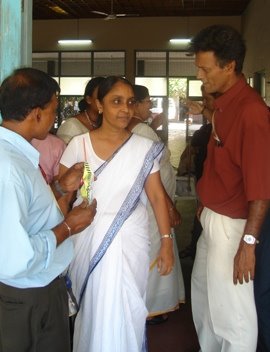
I asked Marie what she expected this meeting of representatives from all parts of the country would achieve. “At the end of today we want to give a clear message to the Government and Tamil Tigers that they MUST stop the war and talk until a compromise solution is agreed.” she said. “Don’t even give one word of support to the war. We must find out why the LTTE have taken to arms – what are the causes.”
Maria, who works with Janawaboda Kendraya in Negombo, told me,” People here today have come from all over the country – 13 districts including
The message of this big gathering, coming over loud and clear, was that the people on the whole don’t support the war, “We don’t want to give our children to the military to fight the war.” Maria said, ‘We want a just economic development that removes poverty, promotes health education and well being in which all the people of
Well I pray that you’re right Maria and the leaders meeting in
Thursday, June 15, 2006
There Seems to be a Collective Paralysis!
News today, Thursday, 15 June 2006, is that countless women, children and others have been killed in a claymore mine attack near the Sri Lankan Holy City of Anuradhapura. The bomb was clearly detonated to coincide with the return to Kilonochchi of the LTTE team sent to the abortive Oslo talks. Claymore mines, one of the most deadly land mine devices used in Sri Lanka, are detonated by remote devices and this one was clearly done knowing the civilians on the bus, women and children, would be killed in large numbers. The Tamil Tigers immediately claimed they had nothing to do with the attack and called it "senseless violence used for political ends," but Government of Sri Lanka air force jets follow with a bombing raid on Tigers controlled Mullaithivu, clearly indicating the Government of Sri Lanka thought otherwise. Whither the peace process?
The Norwegians have fallen short of announcing their suspension of attempts at facilitating more talks, having so conspicuously failed in Oslo last week, but their frustration is evident. Both sides say they are still committed to a cease fire, agreed 2003, but their actions suggest otherwise. The recent spate of massacres by as yet unidentified groups affecting civilians in both ethnic divide suggests that the will to bring about a real peace process just isn’t there no matter what the ‘international community’ does.
The Tigers’ increasing use of the language of a para-state, suggesting a self elective ‘sovereignty’, and the southern Government’s own flouting of its own constitutional provisions suggests the development of a hybrid Sri Lankan state. To talk in this context of a unitary or federal state is almost nonsensical. There seems to be a collective paralysis among many of those engaged in conflict transformation – all avenues tried and retried but we head unhindered back to a massively destructive war.
The Norwegians have fallen short of announcing their suspension of attempts at facilitating more talks, having so conspicuously failed in Oslo last week, but their frustration is evident. Both sides say they are still committed to a cease fire, agreed 2003, but their actions suggest otherwise. The recent spate of massacres by as yet unidentified groups affecting civilians in both ethnic divide suggests that the will to bring about a real peace process just isn’t there no matter what the ‘international community’ does.
The Tigers’ increasing use of the language of a para-state, suggesting a self elective ‘sovereignty’, and the southern Government’s own flouting of its own constitutional provisions suggests the development of a hybrid Sri Lankan state. To talk in this context of a unitary or federal state is almost nonsensical. There seems to be a collective paralysis among many of those engaged in conflict transformation – all avenues tried and retried but we head unhindered back to a massively destructive war.
Sunday, June 11, 2006
The Tsunami offered no opportunity to re-think the purpose of nationhood,
Mid June now and peace seems further way following the chaos of the Oslo meetings last week. Or non- meetings as the media portrays it this weekend. Of course as ever each sides blames the other and no one accepts responsibility which is true of the recent spate of horrific massacres, Alaipiddy, Welikanda and now Vankalai.
The LTTE could clearly have said before arriving in Oslo, for what they now say they saw as bi-lateral talks with Norway and the Sri Lanka Monitoring Mission countries, that they were not prepared to meet the Sr Lankan Government delegation face to face. They left this to the first day of the meetings. What an enormous gamble wth destiny and what a colossal waste of time. Now who pays for all this waste? And in demanding that the SLMM monitors from EU countries now withdraw from the SLMM as a consequence of the formal banning of the LTTE as a terrorist organisation in Europe, who is supposed to pay for the new monitors? Surely not the LTTE! And why should it be paid for by the much pilloried Norwegians? It is of course the civilians who finally pay with their lives.
The SLMM also choose last week to release their latest report on the Cease Fire Agreement and its findings are fairly damning of both the LTTE and the Government. It makes dismal reading but the Government response shows absolutely no sign of culpability. With such a low level of confidence from both parties how can the SLMM continue? Most observers here feel the CFA is now only honoured in the breach. With seemingly all avenues now exhausted to get compliance to the ceasefire we all wait in dread for the wholesale reversion to war and the tremendous loss of life and development opportunity, which Sri Lanka will almost certainly suffer.
The tragedy of the Tsunami offered no opportunity to re-think the purpose of nationhood, turning it to uniting and not dividing peoples. It seems at the beginning of this week that the real and lasting monument to the many 10s of thousands who died in both the war and the Tsunami, will not be The Peace as we had all hoped, prayed and worked for.
The LTTE could clearly have said before arriving in Oslo, for what they now say they saw as bi-lateral talks with Norway and the Sri Lanka Monitoring Mission countries, that they were not prepared to meet the Sr Lankan Government delegation face to face. They left this to the first day of the meetings. What an enormous gamble wth destiny and what a colossal waste of time. Now who pays for all this waste? And in demanding that the SLMM monitors from EU countries now withdraw from the SLMM as a consequence of the formal banning of the LTTE as a terrorist organisation in Europe, who is supposed to pay for the new monitors? Surely not the LTTE! And why should it be paid for by the much pilloried Norwegians? It is of course the civilians who finally pay with their lives.
The SLMM also choose last week to release their latest report on the Cease Fire Agreement and its findings are fairly damning of both the LTTE and the Government. It makes dismal reading but the Government response shows absolutely no sign of culpability. With such a low level of confidence from both parties how can the SLMM continue? Most observers here feel the CFA is now only honoured in the breach. With seemingly all avenues now exhausted to get compliance to the ceasefire we all wait in dread for the wholesale reversion to war and the tremendous loss of life and development opportunity, which Sri Lanka will almost certainly suffer.
The tragedy of the Tsunami offered no opportunity to re-think the purpose of nationhood, turning it to uniting and not dividing peoples. It seems at the beginning of this week that the real and lasting monument to the many 10s of thousands who died in both the war and the Tsunami, will not be The Peace as we had all hoped, prayed and worked for.
Free Open Source Software is really the way to go for many of our small development partners
WHAT IS FOSS?
Free Open Source Software is really the way to go for many of our small development partners here in Sri Lanka. I learnt this recently at a workshop in May hosted by Lankanet, one of CAFOD’s longest partners in Sri Lanka.
As World Trade Organisations rules get tighter; rules which struggling economies of places like Sri Lanka are impelled to implement, then access to standard software becomes more expensive. However there is really no longer a need for most organisations to run standard proprietary software, such as Microsoft operating systems or MS office packages, and pay the expensive licenses they demand.
All the standard, and many not so standard, software needs can now be satisfied by FOSS, Free Open Source Software. This is truly free software often developed by a global network of enthusiasts seeking to promote access to IT for all levels of society and really bridg the digital divide.
CAFOD’s partners in Information Technology in Sri Lanka, Lankanet, have taken this a step further. They have developed a whole office network, (one server and up to 10 clients), which can provide a fast and efficient modern networked office at a fraction of the price of a standard network of office PCs. This is known as a Thin Client Network where only one Pentium 4 PC is necessary and up to 10 old Pentium 2s or 3s can be networked using LINUX based software.
Included in this package is the Fedora Operating System, which is now almost indistinguishable from Windows XP, and ‘openoffice.com’ which provides a package of software that rivals MS Office. The big plus here is to be able to run on low memory and old PC at speeds, which make them seem practically new. This is simply done by running each of the clients (the older PCs) directly off the main Pentium 4 or equivalent, PC using a router and special LINUX networking software. The second major bonus is the whole system is practically free of virus attacks.
Now the time has arrived when free software can really bring free access nearer to reality but convincing people to change is not easy. Well the people attending this opening workshop were convinced – now to get them trained up to set up networks in their own offices is the next task. Good luck lankanet!
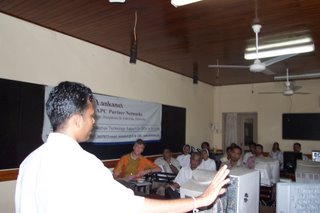
Free Open Source Software is really the way to go for many of our small development partners here in Sri Lanka. I learnt this recently at a workshop in May hosted by Lankanet, one of CAFOD’s longest partners in Sri Lanka.
As World Trade Organisations rules get tighter; rules which struggling economies of places like Sri Lanka are impelled to implement, then access to standard software becomes more expensive. However there is really no longer a need for most organisations to run standard proprietary software, such as Microsoft operating systems or MS office packages, and pay the expensive licenses they demand.
All the standard, and many not so standard, software needs can now be satisfied by FOSS, Free Open Source Software. This is truly free software often developed by a global network of enthusiasts seeking to promote access to IT for all levels of society and really bridg the digital divide.
CAFOD’s partners in Information Technology in Sri Lanka, Lankanet, have taken this a step further. They have developed a whole office network, (one server and up to 10 clients), which can provide a fast and efficient modern networked office at a fraction of the price of a standard network of office PCs. This is known as a Thin Client Network where only one Pentium 4 PC is necessary and up to 10 old Pentium 2s or 3s can be networked using LINUX based software.
Included in this package is the Fedora Operating System, which is now almost indistinguishable from Windows XP, and ‘openoffice.com’ which provides a package of software that rivals MS Office. The big plus here is to be able to run on low memory and old PC at speeds, which make them seem practically new. This is simply done by running each of the clients (the older PCs) directly off the main Pentium 4 or equivalent, PC using a router and special LINUX networking software. The second major bonus is the whole system is practically free of virus attacks.
Now the time has arrived when free software can really bring free access nearer to reality but convincing people to change is not easy. Well the people attending this opening workshop were convinced – now to get them trained up to set up networks in their own offices is the next task. Good luck lankanet!
Wednesday, June 07, 2006
Sugandhini had suffered from asthma - a message from a CAFOD friend
Dear Friends
I was really disappointed having the experiences around injustices and very few even care those who try do some work for justice.
Just I want to share my day………
Sugandhini had suffered from asthma for a long time, according to her relatives so her parents had tried several times to get bail but each time it was rejected. Earlier morning on June 5th, according to her friends, she was in her prison cell screaming and begging for help. She continued for nearly 3 hours, her two cell mates also made knocking noises on the cell windows yet no officer came.
Then finally around 4.20 am she was admitted to the Negombo hospital but according to the doctors there they said it was too late, they couldn’t do anything, she was pronounced dead.
Sugandhini’s mother and here relatives came from
After the postmortem the body was brought to a funeral parlor in Negombo town and around 10pm was taken to
We actually heared, in the funeral parlor, that some RS 25000 had been given in payments for the officers from the police to the prison. This was according to the relatives. As a Sinhalese I really felt ashamed and just cannot believe how these persons can do such inhuman practices to such people.
According to them the payments were, for the special vehicle to transport the body to Jaffna RS 30,000.00, for the funeral palor RS 45000.00 but then bribes of RS 25,000.00
What a world?
I was just thinking whether I should share some very personal things ….. During the course of all these journeys today my motor bike stopped. It had run out of petrol. I had only RS 40 in my pocket which is not enough to fill the tank with petrol. Then Sahaj, our Muslim friend, offered some money which solved the problem.
During the day there had been no time to even have lunch but around 4pm we went to a hotel, in the Muslim area of Negombo, just to have tea. We then saw a few people reading our Tamil news paper. Our friend approach the people reading the paper and asked about the newspaper not saying that we had any link with it. They said they very much appreciated it and even directed us where to buy one. We went to the shop they had directed us to but no more papers! All were sold.
Then with all these feeling and tiredness sat on the chair in front of the computer to read emails then I so your mail.
That’s why in the very beginning that I wrote Really thanks.
I feel free now, the time is 4 am on June 7th .
In solidarity
Monday, April 24, 2006
'Here we are, Muslim, Hindu and Christian living peacefully together!

With a number of Caritas Sri Lanka's international partners I visited Batticaloa and Kalmunia from 26th to 28th March. We had just attended a bi-annual meeting of their National Peace Programme and this visit was to observe some of the issues the programme was having to address at community level.
Both Batticaloa and the Kalmunai/Ampara Districts are areas where the Tsunami of December 2005 had it's most devastating impact. Many coastal communities were washed away with enormous loss of life and property. In this picture we had a meeting with people in a temporary camp in Kalmunai. Some permanent houses have now been built there by EHED, the Caritas Sri Lankan local partner, but the demand vastly outstrips the available resources. As many know the need is not for money but to make sure that it effectively gets to where it is needed and this is where the local capacity is a problem. Finding the building contractors, sorting out the land/legal issues, separating the genuine beneficiaries from those who see the opportunity to better themselves and finally empowering the communities to manage the process of rebuilding their villages; all these are problems EHED has to deal with which necessarily makes the process of building homes a slow one.
In the community you see in this picture people had gathered to say 'Here we are, Muslim, Hindu and Christian living peacefully together but the time it is taking to help us build new homes is causing conflict between us'. Our EHED colleagues told us that this is natural conflict, between those chosen as the first to benefit, women headed households, or those familes with injured or disabled, and those who may have to wait for one or two years to finally be re-settled. 'Sadly there are always those who can generate envey and bittnerss for political purposes to divide the community', one EHED staff said to me.
Monday, March 13, 2006
A week in Sri Lankan politics is no time at all!

A week in Sri Lankan politics is no time at all! Here in Sri Lanka the temperature is soaring both the meteorological and the political sense. The Geneva talks ended on a rather surprising upbeat note 23 February 2006 but it seems to have been downhill ever since. Both sides continue business almost (has to be said not quite to the violent levels of a few months back) as usual. Children are still purportedly being taken in by LTTE for ‘voluntary training’, according to a recent UNICEF statement and Sri Lankan security forces still seem to be giving safe haven to break-away LTTE groups. A turn up for the books today. Monday 14th April, is that the JVP seem to have indicated that they’ll accept an Indian Federal type constitutional settlement. Somehow I can’t believe that and we’ll probably find a correction by a leading JVP spokesperson in the press tomorrow.
However on the bright side Mahinda Rajapaksa is proving to be a probably much abler politician than his predecessor Chandrika. She has thoroughly destroyed any chance of acquiring ‘elder statesman’ credibility, and last week ‘fled’ to London after a squabble over leadership of Bandaranayake’s political party the SLFP, when the party is heding for important local Government elections. It hardly seems possible that the 'President of the party, which she still is, should be out of the country during vital campaigning time. I think there’s a strong possibility she’ll settle in the UK in the long term never quite able to come to terms with her family finally being levered from the leadership of the political party her father founded.. Sad really – she could have retired gracefully from direct politics and played a sort of ‘apolitical’ Jimmy Carter/Bill Clinton type role. Well that’s not going to happen now.
A surprise to many of us was a visit by John Paul Lederach to Colombo last week as the guest of Inpact, local agency engaged in various conflict transformation activities. I have chosen the picture of his lecture to a small assembled group of local and expatriate people engaged in various dimensions of peace building, to show here. One of the most enduring images which comes to mind from his short talk is the metaphor of the spiders web as applied to conflict transformation. The spider builds its web very strategically with key anchor points and main cables intersecting in the centre, but each segment can survive damage to any one area. Conflict transformation should similarly be built from many segments, strategically cooperating but the failure of any individual initiative will not impede the whole. We’re all hoping he’ll be back.
The local Government elections are just 2 weeks away and as yet news of campaign violence seems mercifully small. However, yet again, there are major problems. The Tamil National Alliance of the North and East has called for the elections to be postponed, as have the major national independent election monitors, PAFREL. The Courts have issued various injuctions and legal instructions halting the elections in some districts and the Elections Commissioner has a complex task in sorting out the legal muddle. I think we may well hear later this week that the elctions are postponed for another couple of months giving time, hopefully, for a new electoral register to be used and for voter ID to be introduced. Both improvements which many political parties seem to resist. If these provisions can be implemented it will give the election results much more credibility.
Sunday, February 05, 2006
A Visit to The Community Trust Fund, Puttalam
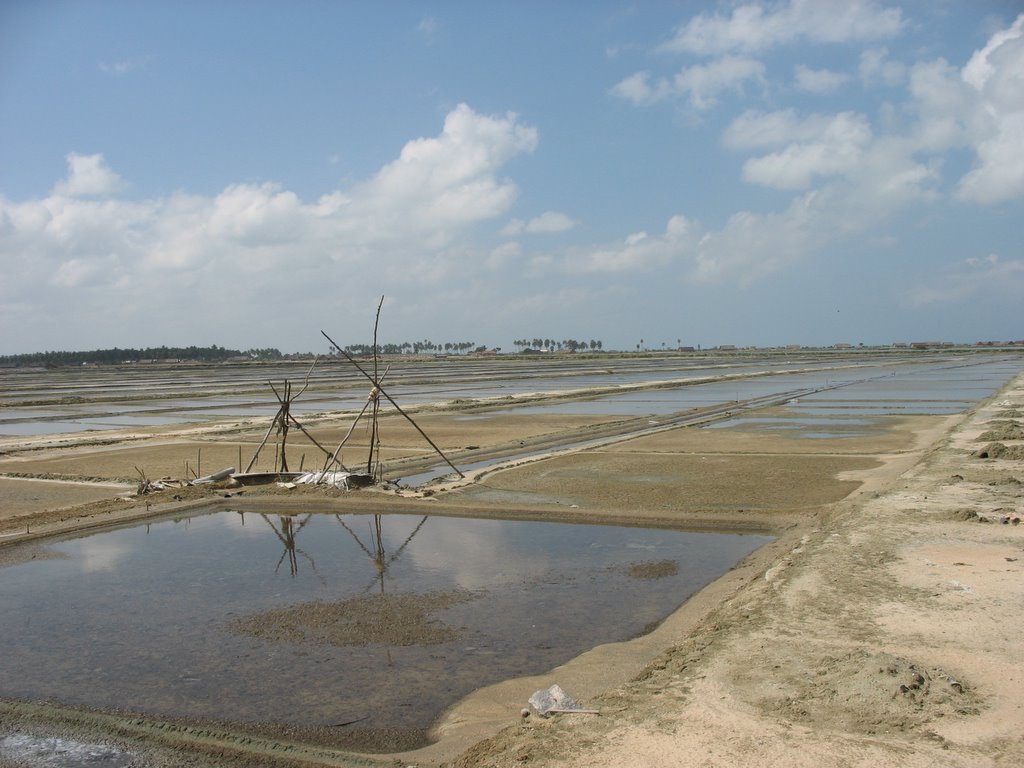
My visit to Puttalam on 3rd February 2006. Apparently 'Upu' means salt and ‘talam’ means base or place in Tamil, hence the name of this small but ancient settlement on the western coast of Sri Lanka.
In the company of Mr Nihmatulla, a programme manager with Community Trust Fund and working particularly with IDPs, we visit two camps. These internally displaced Muslim people come from various part of the north of Sri Lanka but particularly from Mannar and Jaffna. They were expelled from those areas in 1990, casualties of the on going war between the Tamil secessionists and the predominantly Sinhalese south.
Just north of Puttalam town, on the edge of the salt pans spreading for miles to the north, we visited Saltern Camp One, Here there are 105 families equalling about 350 people who have been here for 15 years. ‘About 40% of those now living in this camp have been born since the eviction from their northern homes.’ Says Mr Nihmatulla who would like to work in this camp to help improve conditions but the only funds CTF can find at the moment is for work with the Tsunami survivors. “The conditions here are bad for any permanent settlement and the lack of toilet facilities is one of the main problems, often leading to conflict between the families. We have only 25 toilets and 80 families have no toilet and so use communal facilities where conflicts erupt. There is no privacy for the women”
‘These families had good jobs in Jaffna’ Mr Nihmatuall reflects, ‘They were traders, gold merchants and skilled craftsman but now many are unemployed or under employed in menial tasks.'
In my community in Jaffna some 30 families were effected by the eviction in 1990

We met one of the camp leaders, Mr Fawzan who was a metal worker and used to lived in Moor Street Jaffna. ‘In my community in Jaffna some 30 families were effected by the eviction in 1990. We have never been given any good reason why the Tamil Tigers just suddenly told us to leave. We were all piled into a lorry and driven here to Puttalam and lost all our family goods and trading materials, we lost everything.”
‘I have 6 children’ and whilst saying this Mr Fawzan introduces me to his youngest, Murshid 4 years old, who rushes into the small grey brick house to sit by his Dad. ‘I want to be a mechanical engineer when I grow up’ says Murshid, but I think that’s more his father’s wish. Murshid munches some salted roasted lentils and offers me some. ‘My eldest son is now 25yrs and is a street vendor selling small fish and lentil cakes, ‘wade’, which he makes himself. He earns about 300 rupees each day from this’ Mr Fawzan explains. ‘Another son 20 yrs works as a shop assistant and earns 200 rupees a day, so I am lucky that some members of my family can work. I got training as a mason but it is difficult to find work for me in this area so I can only work sometimes. I have built my own house here in brick, with a tin roof supplied by FORUT and UNCHR, but I have no land title and so when, or if, I finally leave here, I will lose it all again. I can’t sell it to anyone’. ‘But I don’t want to return to Jaffna.’ Says Mr Fawzan ‘What security will I ever have that the same won’t happen again?’. 'We need to settle here, many of us would given the chance.'
The Saltpans Are the Distinctive Resources of the Puttalam

Mr Fawsan describes the income position of many families, ‘we get an IDPs allowance each month of only 1,500 rupees compared to a typical Tsunami displaced family which gets 5,000. No one can survive and eat on that and there’s no increased allocation for bigger families’. ‘Some youth work in the salt pans, some in the pawn farms although a recent outbreak of ‘white-spot’ disease has closed those places temporarily’. Some of the women, but very few, 7 from this village I think, manage to get work in the textile factory in town from which they earn about 4,000 per month (about $40).
A small inquisitive crowd is gathering now, all men as the women in this Muslim community generally keep away from strangers like me. Everyone has a story to tell although they’re unclear about what I can do about it but the overwhelming request is that I find funds for more toilets.
Mr Nafis joins the conversation, a 26 yrs old man who arrived here when he was 12 from Jaffna. ‘After I left Jaffna my education was interrupted and although my parents tried to get me into a school here the ‘donation’ requested by the school of 5,000 rupees was too high. I then spent a long time as a porter in town, carrying loads for traders and I saved a little each month. I saved 50,000 Rups and was able to join with a friend, gathering capital of 100,000 Rups, to start a buying and selling business in salt.’ The saltpans are the distinctive resources of the Puttalam area but the salt produced often lacks iodine, which contributes to a major health problem in Sri Lanka.
‘With my friend, Mr Nafis explains ‘We buy salt from the owners of the salt pans and we hire a lorry to take the product to cities like Kandy, Negombo and Colombo.’ The income is sometimes good but also is seasonal ‘Sometimes we make a profit’ says Mr Nafis, ‘but also often we fail to find purchasers for all our product and rather than bring it back we sell at a cheap or below cost rate and we loose our profit’.
I Am Confused About the On-Going Conflict

We then move up the Puttalam Mannar Road to Salamabad, a small settlement of 150 families many of who came from Mannar in the mass evictions of 1990. Behind the Masholla, the small Muslim prayer hall, we met an old bearded man, Mr Mustafa who cheerfully tells us that he is 72 years old. Under the shade of a Palu, a season sweet fruit tree, we discuss the problems of his village. ‘Many of us here come from a village, Palakuli, only 35 miles from here on the Mannar, Puttalam boarder. It is now under Tamil Tiger control and I have been here with my family for 15 years now’. I am the 4th generation of my family to live in Palakuli, that I know of, but who knows how much further back my family has lived there’. But when I ask him about going back to his village he says ‘I am confused about the on going conflict and I am not sure how we Muslims will gain from any peace negotiated with the Tamil Tigers’.
‘I have visited my home village once’ Mr Mustafa explains ‘about 3 years ago when the Memorandum Of Understanding brokered by the Norwegians, between the Government and the Tamil Tigers, was signed a few of us hired a van and returned to our village to assess what we could do. We had to travel 100 miles or more because the Road is still not open. The village and our lands are now largely over grown by forest and inhabited by wild animal, and the ‘two-legged-tigers’’ he smiles as he refers to the cadres of the Tamil Tigers. ‘We would need a lot of help to clear the village, rebuild our houses and re-cultivate our lands but many of us would do that if only we could get some assurance from the Tamil Tigers that we would have security and would not be evicted again’.

‘I have visited my home village once’ Mr Mustafa explains ‘about 3 years ago when the Memorandum Of Understanding brokered by the Norwegians, between the Government and the Tamil Tigers, was signed a few of us hired a van and returned to our village to assess what we could do. We had to travel 100 miles or more because the Road is still not open. The village and our lands are now largely over-grown by forest and inhabited by wild animal, and the ‘two-legged-tigers’’ he smiles as he refers to the cadres of the Tamil Tigers. ‘We would need a lot of help to clear the village, rebuild our houses and re-cultivate our lands but many of us would do that if only we could get some assurance from the Tamil Tigers that we would have security and would not be evicted again’.
‘We are Tamil speakers, that is our language, why should we be treated like this?’ chips in a young man who joins us in the shade of the tree and doesn’t give his name. He must have been a small child when he came here and now is seasonally employed as a conch shell diver. ‘If there’s to be a real end to conflict Muslim representatives, and I don’t mean government appointees, must be included in talks and any final settlement must give Muslim Tamils full restitution. If not the issues of grievance will fester and certainly lead to more conflict.’ He knows that I will report his words so I am reluctant to ask for his name. Speaking about the possibilities of Muslims directly arming to defend their rights is a hot issue here but so far Puttalam has remained a relatively quiet area. ‘We have Tamil Christians, Hindus, Muslims and Buddhist Sinhalese all in this area’ says the CTF Project manager Mr Nilmatulla, ‘but we have lived in relative harmony and there’s no real ethnic tension here’.
Peace Talks to Bring an End to the Conflict
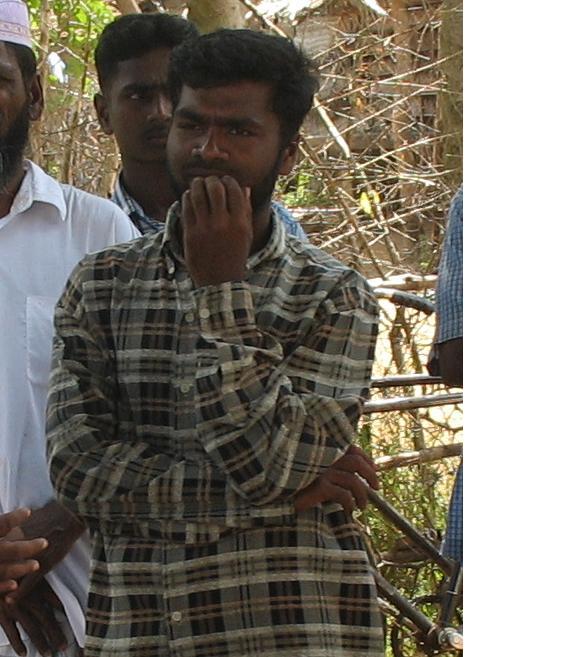
By now some 8 youths and older men have gathered under the tree and I ask what they think must be the core issues addressed in peace talks to bring an end to the conflict. ‘The language issue is at the heart of it’ says the conch shell diver. Tamils must be able to speak our own language, to be understood and to be able to get employment and access to education; we must feel like equal citizens’. ‘If that doesn’t happen how can there ever be peace?’ ‘Also our Muslim land in the northern areas has been taken – this must be given back’. ‘Yes we have heard about the Language Commission saying all civil servants must speak both languages but they have been saying that for ever and nothing changes’. He then adds, ‘There is this new group called Allalan, named after a famous Tamil King, which now circulates threatening messages to the Muslims telling us we are not wanted back in our lands, but when we ask the Tigers they say it is not them, they know nothing about it. ‘We know it is really the Tigers just using the name as a ‘front’ so it is difficult for us to feel and hope in a real peace deal’.
Before I leave the conversation under the tree I ask the group what is the single most important thing that would help them to live a better life and they say ‘Re-open the Puttalam to Mannar Road and allow us at least to go to our fields’.
Wednesday, February 01, 2006
Suresh Wasantha of the Human Rights Centre, Ekala
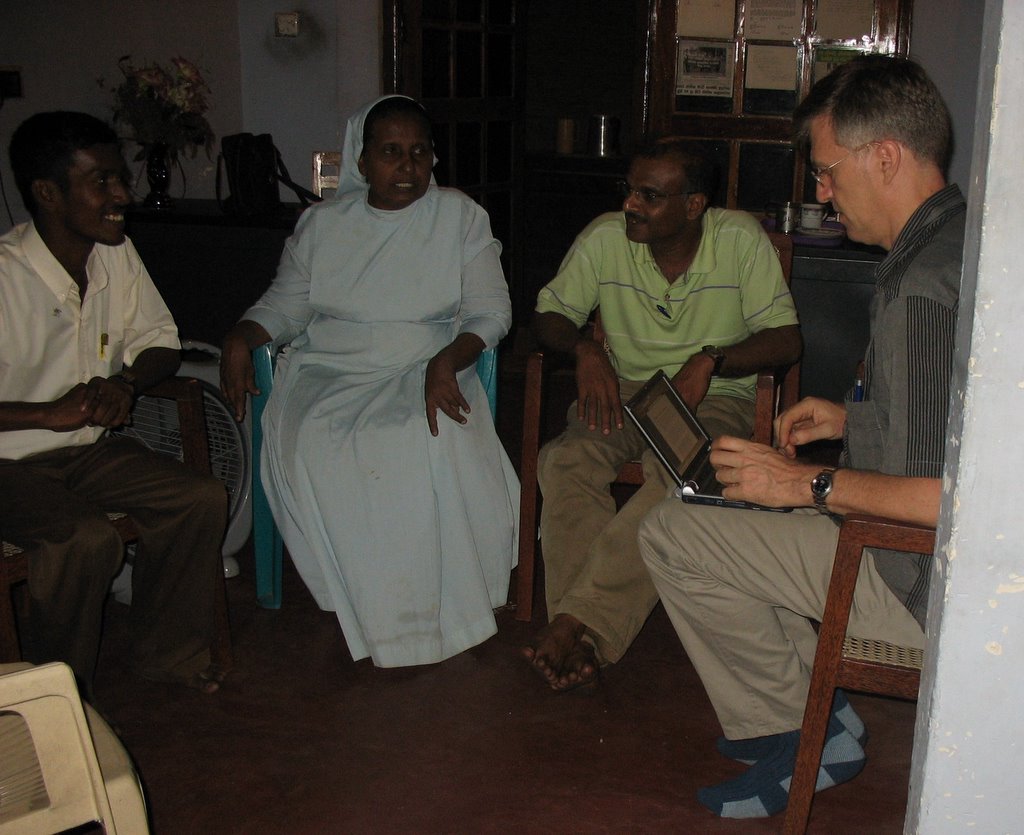
"I am Suresh Wasantha and am 23yrs, I live with my father and elder sister." Suresh, sitting on the extreme left of this picture, tells me a little about the experiencethat brought him to work for the Ekala Human Rights Centre.
I am here in Seduwa and Ekala, just a stones throw from the major Colombo international airport, to visit the Human Rights Centre established 3 years ago by one of CAFOD's partners. I met Suresh Wasantha who joined the Human Rights Centre over a year ago now. He had been employed in a rope factory in Ekala since leaving schools 5 years ago. The work conditions were poor a lack of toilet facilities, no drinking water. A worker who had been at the factory for 20 years had a basic salary of 3,500 in 2005 (about £20 per month) Women were also forced to do the night shift and overtime which was often not paid. During the working hours we also were supposed to have safety items but these were never provided. There was also no proper scale of holidays and no first aid facilities".
"In an emergency if someone was sick in the night there was no vehicle to get a patient to hospital, and it was then that we approached the Human Rights Centre to seek their advice" Suresh told me how a group of workers unhappy about their conditions gradually built up an active group agitating for change. The factory owner was Tamil and many Tamil estate women workers were employed in the factory but working under almost slave like conditions. Suresh is himself Tamil and was able to speak with the workers and help organise a workers association. Earlier a ttempts to establish a union had failed because people were so scared to be marked as organisers.
After Human Rights Day in Feb 2005 the JVP, a very left wing and nationalist group, established a union in the factory based on the conscientising work the Human Rights Centre had been doing but the Centre didn’t get involved directly. However having formed the Union the JVP organisers failed to take up the issues of the workers conditions successfully. 'I had been sacked before the JVP had organised the union and these were on trumped up charges because I had been organising the workers’. The JVP organised a strike and factory had to close and all the workers were dismissed. The strike was then called off but some workers then filed a case with the labour tribunal and again this was done with assistance from the Centre’s legal team. The case should be heard in February this month. '30 went on strike, 6 went back to work and 15 have filed the case' Suresh says 'We are a little more confidant now that we will get justice'.
“As a victim of injustice I feel the need of supporting young workers who have similar problems, including my old colleagues” Shuresh said “I hope to help make other workers aware of their rights and to improve my own knowledge on labour laws”.
Subscribe to:
Posts (Atom)